

Infection Control News: Can Eyedrops Replace Your Reading Glasses?
Millions of people over the age of 40 share an unfortunate common ground: reading glasses. On the surface, it doesn’t seem like the worst fate, but the increasing reliance is the bad part. The cause is presbyopia, the gradual loss of the eye’s ability to focus—that’s the kicker. Over time, the lens of the eye hardens, and it’s an unfortunate inevitability.
But researchers have been looking intently at this age-induced issue and may have found a way to potentially combat it. More impressively, they may have found a solution through one of the simplest means: eyedrops.
In this article, we’d like to look at a story from Science Daily about the groundbreaking research being done by the ESCRS into a daily eye drop that can potentially restore vision for up to two years. Offering a safe, non-surgical alternative to reading glasses.
The News
The 43rd Congress of the European Society of Cataract and Refractive Surgeons (ESCRS) has suggested that a specially formulated daily eye drop can help stave off the sight degradation caused by presbyopia, These eyedrops are currently part of an innovative treatment developed in Argentina.
The drops themselves are a complementary relationship that mitigate the separate effects of one another, leaving only the benefits to be utilized. There are two active ingredients:
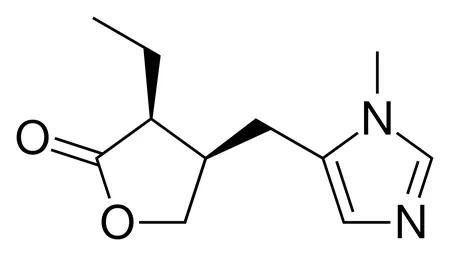
Pilocarpine: This is the primary agent. It’s a drug that’s responsible for the therapeutic effect on the eye. It helps to improve near vision by constricting the pupil and contracting the ciliary muscle. The ciliary muscles are part of the ciliary body, a ring of tissue around the lens of the eye, and the muscles help to focus the lens when they contract.
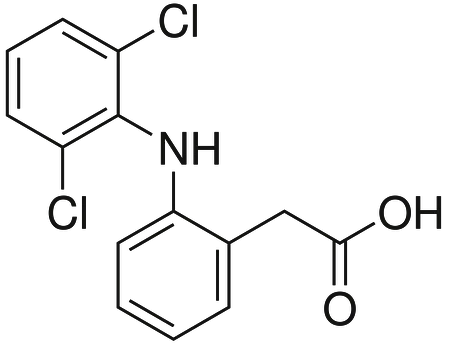
Diclofenac: This is the mitigating agent. The drug’s role in this eyedrops system is that of support. Pilocarpine can have the adverse effect of inflammation and discomfort if used on its own. But diclofenac counteracts the primary agent as an anti-inflammatory, relieving the discomfort you’d feel without it.
Together, this dynamic duo creates a successful combination for your eyesight. The results are showing a great number of vision improvements. However, it’s important to emphasize that this treatment is not intended to replace surgical interventions, but rather to serve as a valuable, safe solution for patients who seek freedom from the inconvenience of eyewear.
What Are the Results So Far?
As of now, there has been a retrospective study done with 766 patients, the average age being 55. Researchers found that the majority of participants experienced rapid, sustained improvement in near vision. Within just an hour of the first dose, patients had an improved reading performance on a Jaeger chart of 3.45 extra lines.
Furthermore, approximately 83% of all patients maintained good functional near vision at 12 months. The improvement sustained for a median duration of around 434 days, and even up to two years in some participants. For proper use, the eye drops were used twice daily, and a third dose was given if needed. But the key finding was that the study had shown the ability to individualize the treatment based on the severity of the patient’s presbyopia,
Then it was all about finding the right concentration. Patients with less severe presbyopia, responded best to a 1% concentration. Patients with more advanced presbyopia, needed 2-3% concentrations to see the best visual improvement.
The safety profile of it all was a huge positive, showing no significant adverse effects. An adverse effect in this case would be something like intraocular pressure or retinal detachment. The side effects were actually milder, and attributed to things like:
- Temporary dim vision – 32% of cases
- Irritation upon administering the drops – 3.7% of cases
- Headaches – 3.8% of cases
Even with the mild side effects, nobody discontinued the treatments due to the side effects, which is a huge win. But experts also caution that long-term use of pilocarpine can sometimes cause less common, but more serious, side effects: things like reduced night vision, dim vision in low light, or in rare cases, retinal detachment.
This highlights the need for continued monitoring before the treatment can become mainstream. Even with these cautions, it’s an excellent safety profile, paired with the ability to precisely tailor the treatment to the patient’s severity of vision loss. It’s what makes this treatment a truly revolutionary solution.
Final Thoughts
For decades, the age-old problem of presbyopia,—that slow, inevitable decline in near vision—had only one solution: reading glasses. Now, the game has completely changed, as this research demonstrates a powerful, non-surgical alternative: a simple, twice-daily eye drop. The effectiveness comes from two key ingredients working in harmony: Pilocarpine, the active agent that temporarily shrinks the pupil to improve near focus, and working in tandem with Diclofenac, the support agent that acts as an anti-inflammatory to cancel out potential irritation.
This combination has delivered impressive results, with patients seeing rapid improvement that is sustained for up to two years, all while maintaining a high safety profile. Furthermore, the ability to adjust the treatment concentration based on the severity of the patient’s vision loss ensures a truly customized care approach. This groundbreaking treatment promises to restore independence without reliance on corrective lenses, offering a highly convenient and individualized solution for millions.
If you’d like to read the full story from Science Daily, you can find it on their site here. If you have any questions about any and all things infection control, or anything else, give us a call at 704-966-1650. For more news, keep it here with Sterilizer Autoclave Solutions.
As always if you have any questions about this process or anything else please feel free to contact us and take advantage of our “FREE TECH SUPPORT.”
We also offer FREE VIRTUAL TECH SUPPORT to “See and Talk” with a “Real Time Live Technician” for any problems you may be in need of help with.
You can also use our “FREE MAINTENANCE PROGRAM”. Take the guesswork and worrying about what unit is due for maintenance and which maintenance cycle it is time for. We will keep track of all your autoclaves and let you know when it’s time for anything.