

How Can We Combat Tuberculosis in 2026?
Despite the various changes throughout the industry to combat it, TB remains a hugely prevalent force in the world of infection. Mycobacterium tuberculosis has been a global threat since its discovery in 1882. But with each year, new plans are always being made to ensure that the threat is lessened.
With another World TB Day in the books, many sources have been coming out with information on what it tells us in 2026. One source in particular, Infection Control Today, recently wrote an article about WTBD that we’d like to talk about. With the various ways that infection control practices have improved and shifted to better combat the disease.
What Happened in World TB Day 2026?
World Tuberculosis Day has been a part of the various awareness days recognized by the infection control industry for over 40 years. The World Health Organization first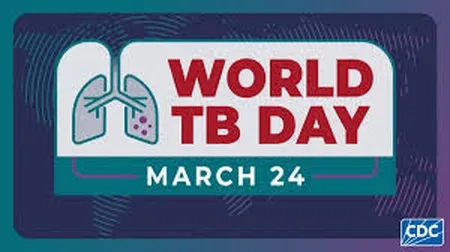 established World TB Day in March 24th 1982 alongside the International Union Against Tuberculosis. The date isn’t a coincidence either, being the 100th anniversary of Dr. Robert Koch’s announcement of his discovery of TB. It was created to help raise awareness surrounding the devastating impacts of TB in things like health, social and economy.
And after 44 years of infection control evolution, we arrive at 2026, where the end of March marked the latest chapter in this event. World TB Day 2026 arrived as a sobering reminder that Tuberculosis remains one of the world’s most persistent infectious threats, still holding large infection and fatality numbers. With 10.7 million cases a year, and 1.23 million deaths. The theme of the awareness day this year was simply, “Yes! We Can End TB.” Which helps show that we can in fact, beat the wave if we know how to properly fight back. And that’s what World TB Day is for. The multisectoral collaboration of efforts and innovation.
For IPC professionals, TB represents a persistent occupational hazard and patient safety concern. With professionals like Shahbaz Salehi of the Foothill Regional Medical Center saying that it’s been on the rise for years. Driven by things like drug resistance, immunosuppressive conditions and global travel. Salehi also said that strained public health resources, inadequate treatment options and other factors exacerbated by the COVID-19 pandemic only continued to fuel it.
What Was the WHO’s Recent Innovation?
One of the most significant shifts this year is the World Health Organization’s recommendation of new, battery-powered diagnostic tools designed for use at the point of care. These devices can deliver accurate results in less than an hour for a fraction of the cost of traditional molecular testing. From an infection control standpoint, this is a transformative development.
Tedros Adhanom Ghebreyesus, PhD, WHO Director-General, said this on the new diagnostic technology: “These new tools could be truly transformative for tuberculosis, by bringing fast, accurate diagnosis closer to people, saving lives, curbing transmission and reducing costs.” He continued, “WHO calls on all countries to scale up access to these and other tools so every person with TB can be reached and treated promptly.”
The article from Infection Control Today explains that faster TB diagnosis can help to reduce a number of things:
- The duration of patient infectivity in health care settings.
- Risk of occupational exposure to health care workers.
- Days required for respiratory isolation protocols.
- And the burden on infection control resources.
It also goes on to say that IPC professionals should familiarize themselves with the new capabilities of this diagnostic tech being implemented. As optimal diagnostic utilization can come from coordination between microbiology, respiratory services and infection prevention.
What Are the Key IPC Responsibilities in TB Control?
The article from ICT explained through all of this that there are several tuberculosis related activities that IPC professionals should prioritize.
- Respiratory isolation protocols: Ensuring negative-pressure rooms and proper personal protective equipment for N95 masks and respirators
- Staff screening and vaccination: Maintaining TB screening programs for health care workers and monitoring BCG vaccination status
- Contact investigation: Identifying and managing TB exposure incidents in health care settings
- Patient education: Supporting adherence to directly observed therapy and infection control measures
- Surveillance: Tracking TB cases and health care-associated TB transmission
What Are the Ongoing Challenges of TB?
Ending the TB epidemic is not just a clinical goal but a massive economic opportunity. Current data suggests that every dollar invested in TB prevention and treatment generates up to 43 dollars USD in economic and health returns. Yet with that, global funding for TB is still under siege. Healthcare budgets have been increasingly constrained, which means that IPC professionals have to advocate for proper resources to fight TB.
Director of infection prevention and control for Santa Clara Valley Healthcare System, Priya Pandya-Orozco had this to say: “World TB Day calls us back to the fundamentals of early recognition, rapid response, protecting those at the frontlines of care, as well as our communities.” “Infection prevention is where we see science meets action, and where our commitment can truly change the trajectory of this disease.”
World TB Day 2026 is calling healthcare professionals to action. TB remains a global threat despite being preventable and treatable. But, through rigorous infection control practices, new diagnostic technologies, and advocacy for access to testing and treatment, Infection Control Today shows that IPC professionals are uniquely positioned to help advance the battle to eliminate TB.
With the question not being “can we end TB?” The question is, can we invest the necessary recourses and commit to getting it done?
Final Thoughts
In 2026, the message is clear: we finally have the tools to make Tuberculosis a thing of the past. It is no longer just a disease from the history books; it is a modern challenge that we are now meeting with high-tech, battery-powered testing that gives us accurate answers in minutes instead of days. While the infection numbers are still a sobering reminder of the work left to do, the “Yes! We Can End TB“ theme is a call to action for all of us. By investing in better diagnostic gear and sticking to smart safety rules in our clinics, we aren’t just following protocols—we are saving lives and protecting our communities. The real question moving forward isn’t whether the science exists to beat TB, but whether we are willing to commit the time and resources to finish the job for good.
If you’d like to read the full story from Infection Control Today, you can find the link here. If you have any questions about infection control, or anything else, give us a call at 704-966-1650 and we’ll help you find what you need.
Our Links
As always if you have any questions about this process or anything else please feel free to contact us and take advantage of our “FREE TECH SUPPORT.”
We also offer FREE VIRTUAL TECH SUPPORT to “See and Talk” with a “Real Time Live Technician” for any problems you may be in need of help with.
You can also use our “FREE MAINTENANCE PROGRAM”. Take the guesswork and worrying about what unit is due for maintenance and which maintenance cycle it is time for. We will keep track of all your autoclaves and let you know when it’s time for anything.
You can read the full article on World TB Day 2026 from Infection Control Today here.