How Did Enbio Impact the Autoclave Industry?
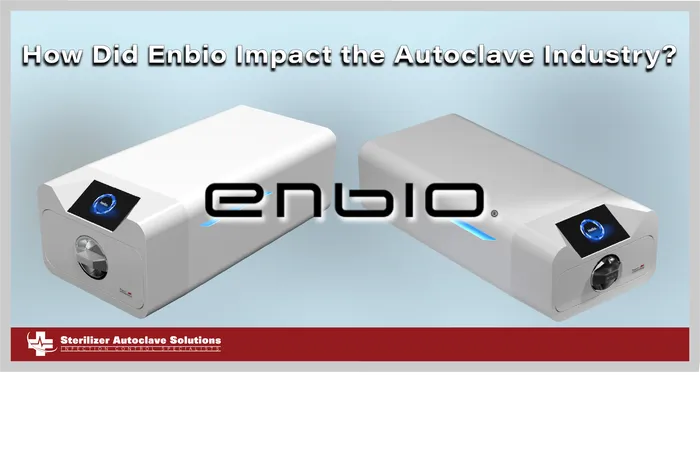
The Enbio S is one of the most innovative sterilization devices currently on the market. In many ways, it represents what the future of sterilization could look like. It made waves in the industry with its impressive speed and sleek design, but it may have also raised a few questions. Sure, the unit looked impressive, but who exactly is Enbio, and where did the company get its start?
Those are valid questions, and we’re here to help answer them.
In this article, we’ll explore the origins of Enbio, a Swiss-associated sterilization brand that, surprisingly, didn’t get its start in the medical sterilization industry. But we’ll get into that. The best place to start is at the beginning.
Where Did Enbio Begin?
While Enbio is recognized today as a cutting-edge medical brand, its foundational technology didn’t originate in a busy dental clinic or a high-end beauty salon. Instead, the company’s engineering roots can be traced back to agricultural biotechnology—specifically, in vitro laboratories designed for plant propagation and cloning.
When micropropagating millions of identical plant specimens, maintaining an absolutely sterile environment isn’t merely an operational goal; it’s essential for biological survival.
Contamination in a single culture can wipe out entire groups of crops. Long before Enbio engineered a commercial medical device, its development team had already mastered the science of precision, repeatable sterilization cycles, and strict environmental controls.
What Did Enbio Create Next?
Armed with extensive knowledge of sterile environments, the team moved into industrial-scale engineering, focusing on fluid sterilization. This led to the development of the FlowJet, an industrial microwave sterilizer engineered to rapidly treat liquid media in laboratory and food-processing environments.
Recognizing that smaller operations also needed rapid processing capabilities without the footprint of heavy industrial machinery, the team undertook a major initiative in miniaturization.
The result was the MicroJet, a compact, tabletop microwave sterilizer. The MicroJet served as an essential proof of concept for the engineers, demonstrating that high-performance, rapid sterilization technology could be scaled down to fit directly on a professional workspace countertop without compromising performance. The engineering shift from treating liquid laboratory media to sterilizing medical instruments required an entirely new approach to thermal dynamics, eventually paving the way for the vacuum steam technology Enbio uses today.
How Did Enbio Shift into Medical?
By 2018, Enbio officially pivoted its commercial focus toward modern steam sterilization, structuring its corporate entity to target the global medical device sector. They established primary manufacturing and corporate footprints across Poland and Switzerland, leveraging robust Swiss quality standards and precision engineering to position themselves in the premium market.
Instead of building another heavy, slow-moving autoclave that required 45 to 60 minutes to complete a single run, Enbio set its sights on solving the primary pain points of the modern practitioner: speed, physical size, and visual appeal.
How Did the Enbio S Change the Game?
The Enbio S made a significant impact on the sterilization market. Engineered as a Class B vacuum autoclave, designed to sterilize complex hollow and porous instruments, it delivered performance that challenged traditional industry expectations.
The Enbio S introduced an impressively fast sterilization cycle, capable of processing unwrapped instruments in as little as 7 minutes. If you think that’s fast, it could also process wrapped loads in just 15 minutes.
But speed was only the beginning.
The Enbio S was designed with the user in mind, operating at remarkably low noise levels of approximately 32–49 dB. Its sleek, compact appearance offered a glimpse into the future of sterilization—one where efficiency and aesthetics could go hand in hand. This combination of features gave the Enbio S a major advantage right from the start. It was particularly well-suited for industries where appearance matters just as much as functionality, including beauty, tattoo and piercing studios, and other wellness businesses requiring reliable sterilization. Businesses in these industries could incorporate the Enbio S into their workspaces without sacrificing the overall look and feel of their environments.
Where Did Enbio Go from Here?
Following the commercial success of the Enbio S, the company expanded its product lineup and continued pursuing opportunities in international markets, including the United States. This expansion brought new products and designs, including:
Enbio Pro: A larger capacity version engineered to accommodate bigger instrument cassettes, targeted specifically at high-volume dental practices and surgical centers.
Enbio Beauty Edition: A specialized variant featuring elegant gold accents and stylized finishes, designed to blend naturally into luxury spas and medical-aesthetic clinics.
Today, Enbio continues to expand its global reach through international distribution. The company has made a lasting impression on the sterilization industry, and its commitment to innovation shows no signs of slowing down.
Now that you know the story behind Enbio, let’s take a closer look at two of its standout autoclaves.
What is the Enbio S?
The Enbio S is a compact, high-speed Class B steam sterilizer designed for medical and aesthetic practices where efficiency and space are essential.
It’s widely recognized for its remarkably fast cycle times, allowing practitioners to turn over instruments quickly while maintaining appropriate sterilization procedures. By utilizing advanced vacuum technology, the Enbio S provides thorough sterilization of compatible wrapped and unwrapped instruments, making it a practical solution for busy professional environments.
But that’s not all. Take a look at some of the other impressive benefits the Enbio S has to offer:
- Exceptional Speed: Capable of completing a standard sterilization cycle in as little as 7 minutes, significantly increasing workflow productivity.
- Space-Saving Design: Its slim, ergonomic profile allows it to fit easily into tight clinical workspaces or on top of busy counters.
- Regulatory Compliance: Fully compliant with medical standards, providing high-level sterilization that meets the requirements for surgical and dental instruments.
- Ease of Use: Features an intuitive interface that simplifies operation, with automated reporting capabilities that save cycle data directly to a USB drive for easy record-keeping.
- Versatility: Suitable for a wide range of tools, including hollow-body instruments, ensuring they are ready for use immediately following the cycle.
What is the Enbio PRO?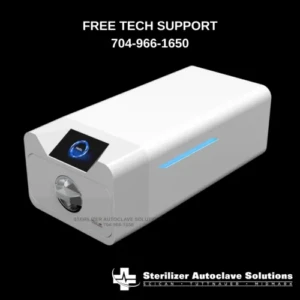
If you’ve ever wondered how to improve upon an already impressive design, the Enbio Pro is a great example. The Enbio Pro is a larger-capacity steam sterilizer engineered to handle greater volumes of medical and aesthetic instruments while maintaining the speed and reliability associated with the Enbio S.
Designed for busy clinics that require rapid instrument turnover, the Enbio Pro features a larger chamber that can accommodate longer or bulkier instruments that might not fit inside smaller countertop sterilizers. It combines clinical-grade sterilization performance with a user-friendly interface, helping practices maintain their sterilization protocols without unnecessarily slowing down daily operations.
Some of the Enbio Pro‘s standout features include:
- Increased Capacity: The larger chamber size allows for the sterilization of significantly more instruments per cycle, making it ideal for high-volume practices.
- Rapid Cycle Times: Despite its larger size, it maintains impressive speed, with full cycles completing in as little as 9 minutes for unwrapped instruments.
- Universal Compatibility: Its dimensions easily accommodate longer dental and surgical tools that may not fit inside smaller, standard-sized countertop models.
- Automated Documentation: Similar to the Enbio S, it provides effortless data management by automatically saving comprehensive cycle reports to a USB drive for auditing and regulatory compliance.
- Simple Operation: Features a plug-and-play design with an intuitive interface, requiring minimal training for staff to achieve consistent, high-quality results.
Final Thoughts
Enbio‘s journey from agricultural biotechnology to modern medical sterilization demonstrates the power of precision engineering and thoughtful design. By challenging the industry’s traditional reliance on slow, bulky, industrial-looking equipment, Enbio has helped redefine how clinical-grade sterilization can combine safety, efficiency, and modern aesthetics. Whether you’re operating a high-volume dental practice or an aesthetics-focused clinic, the Enbio S and Enbio Pro demonstrate that you don’t necessarily have to choose between visual appeal and high-performance reliability.
As Enbio continues to expand, one thing is clear: the company didn’t simply introduce another line of autoclaves. It helped establish a new standard for what modern sterilization equipment can look like and how efficiently it can perform.
If you’d like to see our Enbio selection, you can find them here on our site. If you have any questions about Enbio autoclaves, or anything else, give us a call at 704-966-1650 Option 3 for our Free Tech Support Line. Our technicians will be able to answer any of your questions and help you find whatever you need.
As always if you have any questions about this process or anything else please feel free to contact us and take advantage of our “FREE TECH SUPPORT.”
We also offer FREE VIRTUAL TECH SUPPORT to “See and Talk” with a “Real Time Live Technician” for any problems you may be in need of help with.
You can also use our “FREE MAINTENANCE PROGRAM”. Take the guesswork and worrying about what unit is due for maintenance and which maintenance cycle it is time for. We will keep track of all your autoclaves and let you know when it’s time for anything.