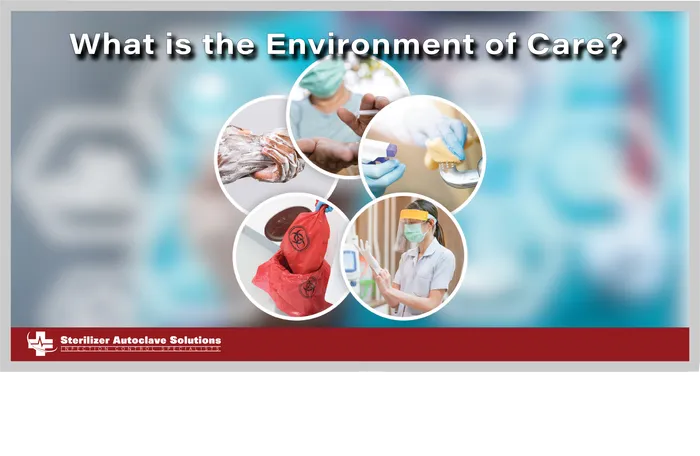
What is the Environment of Care?
Recently, we covered the details of 2026’s Infection Prevention Week. This year’s coverage was all about the generations of infection prevention. It went over the past, present, and even looked to the future of Infection Prevention with the rise in automation and advanced technology. One of the things mentioned in that week that doesn’t get talked about enough is the environment of care.
When we talk about infection control or prevention, the conversation usually starts at the people or even products used. The surgeons who wear masks and gloves, the staff who disinfect, the equipment that needs sterilization, etc. But the space that encapsulates all of that is just as important as the specifics within it.
In this article, we want to look at what the Environment of Care really is. As well as look at a couple examples of how they’re innovating with modern technology. That way everyone can get a better understanding of the bigger picture inside the world of healthcare.
What Is the Environment of Care, Specifically?
The best question to ask is seemingly the simplest, and ensure everyone’s on the same page. What IS the Environment of Care? The Environment of Care, in regulatory terms, is or refers to the comprehensive management of safety and operation within a healthcare facility.
But at its core, the environment of care is made up of 3 basic elements:
- The Physical Space: The building itself, its layout, lighting, air quality systems, and any other special features built to protect patients and staff.
- The Equipment: This means everything used to support patient care or safely operate the facility.
- The People: The staff, physicians, patients, and visitors. Everyone inside the environment plays a role in minimizing risks and following safety protocols.
To manage these pillars effectively, practices typically divide the EOC into roles. With each role being vital to help support the area as a whole. These roles can range from things like safety and security roles, to utility and medical equipment based roles.
Why Is the Environment of Care So Important?
The next logical step is to consider why the environment of care is important. Basic infection control practices can go a long way, but it doesn’t check every single box. Practices place such a heavy emphasis on managing the environment of care for various reasons. And it all comes down to the bigger picture.
When these practices utilize effective measures to create a better environment of care, many other benefits start piling on.
- Infection Control: A well-managed EOC, driven by rigorous environmental services, ensures that operating rooms and patient wards are properly sterilized. Which drastically reduces the transmission of healthcare-acquired infections (HAIs) and helps with infection prevention.
- Patient Safety and Psychological Comfort: Clinical spaces can be deeply intimidating. A well-designed, quiet, and secure environment lowers patient anxiety, which can lower blood pressure, reduce the need for certain pain medications, and accelerate physical recovery.
- Regulatory Compliance and Staff Morale: Strict adherence to EOC standards ensures hospitals comply with federal and state safety regulations (such as OSHA and CDC guidelines). Furthermore, a clean, safe, and organized workspace boosts staff morale and prevents burnout, allowing clinicians to focus entirely on patient care.
And these points don’t even cover all of it. There are still many other benefits like efficient waste management, and boosting overall operational efficiency. With environmental services serving as a backbone, more time is freed for focus elsewhere. In the world of autoclaves, we talk about the automation of “set and forget” units that let staff attend to patients more clearly. With a better EOC, staff can keep their focus where it needs to be, on the patients, without needing to worry about any other factors that can hinder efficiency. It’s an idea that, if executed properly, can help bring a supporting structure to any practice.
What’s more, just like there are advancements in autoclave technology… There are also high tech advancements being used to better the future of the EOC.
Innovating the Environment of Care
The traditional, sterile environment is something a lot of people take notice of when first entering any practice. It’s one of the reasons why modern advancements in EOC are trying rectify that. By utilizing automated systems and other options, practices can put more efficiency and focus on patients back into the hands of staff. And there’s a few ways that the modern environment of care is going about that:
- Smart Automation and IoT (Internet of Medical Things): Hospitals are increasingly utilizing smart sensors and real-time locating systems (RTLS) to track equipment, monitor facility temperatures, and optimize clean-room workflows. Automated inventory systems also prevent supply shortages quietly in the background.
- AI-Driven Environmental Controls: Artificial intelligence is being integrated into building management systems to dynamically adjust air filtration, pressure gradients (critical for isolation wards), and lighting to match patient needs and energy-efficiency goals.
- Healing Architecture and Biophilic Design: Modern healthcare design focuses heavily on “biophilia“—incorporating natural light, indoor greenery, and outdoor views into hospital wings. Studies show that natural elements drastically reduce patient stress and shorten post-op recovery times.
There are also things that go beyond the normal scope of cleaning. Like how some facilities are adopting ultraviolet (UV-C) disinfection robots and antimicrobial surface materials that actively neutralize pathogens, making the physical space safer than ever before. We’ve actually written an article on UV-C robots which you can find on our site here for more.
Final Thoughts
The Environment of Care is more than just a protocol or set of instructions to follow… It’s a support system, an active partner that helps to bring various factors in healthcare to a new level. It spans many facets of a daily practice, from infection prevention and environmental upkeep, to patient satisfaction and security. And all of these things combined help to recognize everything all at once. The physical space, equipment and people involved.
And with the advancements in technology to bring the EOC to the modern era, facilities can further implement an even more efficient workflow. With automation paired with live tracking and remote monitoring, staff can better put their focus elsewhere… All while still having access to the information they need at any time to bolster their already enhanced efforts.
If you have any questions about infection control, or anything else… give us a call at 704-966-1650 and we’ll help you find whatever you need.
As always if you have any questions about this process or anything else please feel free to contact us and take advantage of our “FREE TECH SUPPORT.”
We also offer FREE VIRTUAL TECH SUPPORT to “See and Talk” with a “Real Time Live Technician” for any problems you may be in need of help with.
You can also use our “FREE MAINTENANCE PROGRAM”. Take the guesswork and worrying about what unit is due for maintenance and which maintenance cycle it is time for. We will keep track of all your autoclaves and let you know when it’s time for anything.